
Photo by Anna-Louise
…
Happy 249th Birthday, America!
As we celebrate tonight — or before sunset today, or for the last week as some of my neighbors have — we can thank a Founding Father for the pyrotechnic tradition.
On July 3, 1776, a day after the Continental Congress in Philadelphia voted for independence (the declaration document itself was transposed on July 4, although it took weeks for all the delegates to sign it), John Adams reflected on the historic step he and his rebellious colleagues had done.
The man who would become America’s first vice president and its second president put quill to paper to let his wife Abigail, who was at their Boston home, know what had just transpired and how he hoped it would be recognized annually by future Americans:
“I am apt to believe that it will be celebrated, by succeeding Generations, as the great anniversary Festival. It ought to be commemorated, as the Day of Deliverance by solemn Acts of Devotion to God Almighty. It ought to be solemnized with Pomp and Parade, with Shews, Games, Sports, Guns, Bells, Bonfires and Illuminations from one End of this Continent to the other from this Time forward forever more.”
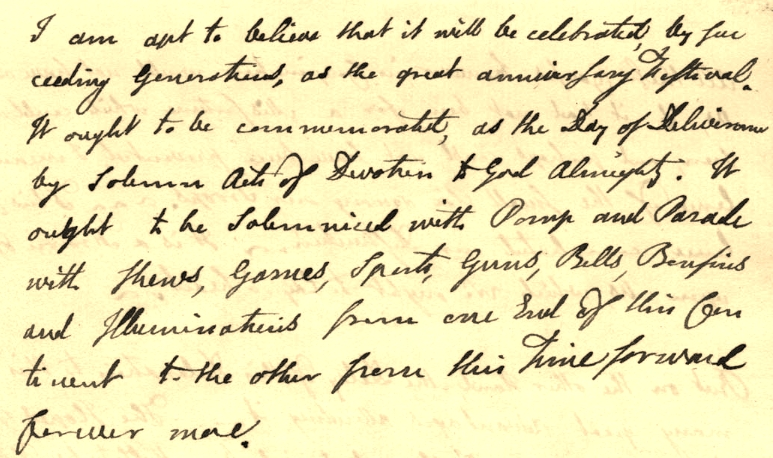
Excerpt from John Adams letter, courtesy the Massachusetts Historical Society, detailing his wish that fireworks be used to celebrate America’s independence.
…
Per Adams wishes, the first commemorative Independence Day fireworks were set off on July 4, 1777, in the then-national-capital of Philadelphia. And, as the saying goes, the rest is history.
Tariffs threat to future fireworks: While we in the United States most closely associate fireworks with the Fourth of July, the controlled explosive displays are synonymous with celebrations around the world throughout the year.
All of us who enjoy a colorful aerial exhibition can thank ancient China. The country is recognized as the birthplace of fireworks.
We’ve come a long way from the first the second century B.C. natural bamboo stalk “firecrackers” that exploded with a bang when thrown into a fire by residents of Liuyang, China.
Today, China produces sophisticated fireworks that exported globally. That’s a concern of the $2 billion U.S. fireworks industry, which gets around 99 percent of its products to light up American skies from China.
Earlier this year, the Trump administration raised tariffs on Chinese imports to as much as 145 percent this year. In May, however, it lowered them to 30 percent after the countries’ leaders reached a truce.
The price of tonight’s fireworks weren’t affected. Those products had been purchased well before Trump’s on-and-off tariff flares.
But U.S. pyrotechnic companies are worried about next year’s July 4 celebrations. There’s special concern since it will be the 250th anniversary of the United States’ founding, a momentous date that all plan to celebrate extravagantly, including with distinctive fireworks displays.
“Fears over the fate of the fireworks industry have spurred an aggressive lobbying campaign,” notes Alan Rappeport in his New York Times’ article How Trump’s China Tariffs Are Jeopardizing America’s Fireworks Extravaganzas.
The concern, notes Rappeport, is that fireworks are not big money makers. “Fireworks shows can cost anywhere from $3,000 to $250,000. The industry’s profit margins are small, making it difficult for importers and retailers to absorb 30 percent tariff rates,” according to the article.
Fewer fireworks for individuals, too: It’s also an issue at the consumer level. When companies can’t cover tariff costs themselves, they pass them along to buyers as price hikes. Or, as opponents of excessive tariffs note, tariffs ultimately are taxes on individuals.
“Fireworks are a luxury, when the cost of fireworks becomes so great the end user can no longer afford to purchase them the way they have in the past,” AJ Burns, a sales at an Indiana company that distributes fireworks, told the New York Times. “If they get more expensive, fireworks will go by the wayside.”
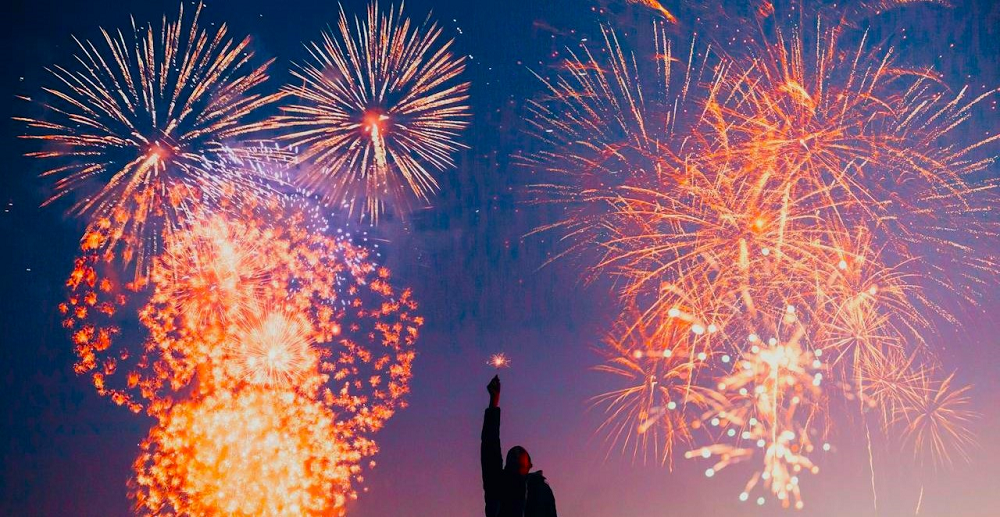
Photo by Rakicevic Nenad
…
To get their no or low-tariff message across, the National Fireworks Association and the American Pyrotechnics Association have asked the White House and Republicans in Congress for tariff relief, using an argument often employed by members of the Grand Old Party: Fireworks are a symbol of American patriotism that should not be taxed.
Will the fireworks industry succeed in getting the tariff/tax relief in time to ensure that America’s 250th birthday party will be a literal blast? Who knows. Just in case next year’s displays are a bust, enjoy this year’s shows.
You also might find these items of interest:
- America’s Yankee Doodle Boy gives us a tax deduction rule
- Fourth of July fireworks, literally and on the tariff front (2018)
- ‘Taxation without representation is tyranny’ & 12 other tax quotes for the Fourth of July
Advertisements
🌟 Search Amazon Home Audio Products 🌟
The text link above is an affiliate ad. If you click through and then buy a product, I receive a commission.