Happy Birthday, America! July 4 is special to all of us Americans, the day we declared our independence from Great Britain.
Taxes, as everyone knows thanks to James Otis’ famous announcement that “Taxation without representation is tyranny,” were among the reasons we sought to govern ourselves.
And taxes, even after we gained control, continue to play a key part in our lives, politics and popular culture.
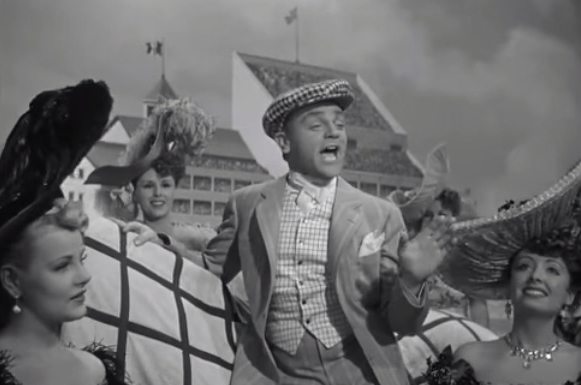
James Cagney, before he became the prototypical movie gangster, was as song-and-dance man. He showed off those talents in “Yankee Doodle Dandy,” the biopic of a man who not only gave us great musicals, but also an Internal Revenue Code rule about deducting business expenses. (Watch the scene in the YouTube video)
…
Tax breaks song and dance: Take the movie “Yankee Doodle Dandy.” This 1942 biographical film musical film was about George M. Cohan, known as “The Man Who Owned Broadway.” It starred a pre-gangster James Cagney in the title role.
While patriotic through-and-through, the movie didn’t include Cohan’s famous contribution to the U.S. tax world.
The famed vaudevillian was audited by the Internal Revenue Service and told that he was not allowed to deduct many of his business and entertainment related expenses because he did not keep all of the necessary receipts. Cohan appealed this ruling and the courts sided with him, forcing the IRS has to accept estimates of his expenses.
The Cohan Rule is now a law that allows taxpayers to deduct some of their business-related expenses even if the receipts have been lost or misplaced so long as they are reasonable and credible.
Enrolled Agent Craig Smalley has the full background and more details on the Cohan Rule in his July piece last year for AccountingWeb.
Smalley also has some cautionary words for those folks who don’t keep any tax records:
“The Cohan rule is not a blank check. In fact, the Tax Court has discretion on what it will estimate and what it will not. To make this type of estimate, there must be sufficient evidence to satisfy the court that at least the amount allowed in the estimate was actually incurred for the stated purpose.”
My fellow tax blogger, Wandering Tax Pro Robert D Flach, has the same advice in his also excellent look at the Cohan Rule:
“Despite the fact that [the Cohan rule] ‘out’ exists, you should not use it as an excuse not to keep good contemporaneous records and maintain detailed documentation of all your business expenses.”
Yankee doodling: Here’s a Revolutionary fun fact. Yankee Doodle Dandy wasn’t always something to be celebrated.
The British forces sang the song “Yankee Doodle” which Cohan revised for his patriotic piece to berate the Americans during the Revolutionary War. A dandy is a vain gentleman. Macaroni was a fancy style of dress. So a common soldier putting a feather in his cap would not make him a distinguished gentleman, nor a dandy.
ABC News offers some additional explanation on how we Americans came to co-opt the tune:
The song “Yankee Doodle Dandy” became popular among the British as well as the rebels. A doodle was a simpleton and the phrase “stuck a feather in his hat and called it macaroni” implied the backwoods bumpkins could put a feather in their coonskin hats and think they were as elegant as European in the latest Italian style — the “macaroni.”
The American army embraced the derisive song and when Gen. Cornwallis’ troops surrendered at Yorktown to end the war, they march out of the fort playing “The World Turned Upside Down.” They were met by an American band playing “Yankee Doodle Dandy.”
…
More revolutionary tax thoughts: While the early Americans borrowed some British lyrics, we have plenty of our own original tax thoughts.
For example, in the words of one of the most cited founding fathers, nothing is certain but death and taxes.
Ben Franklin’s famous quote is just one of 13 tax related words of wisdom from some our country’s leaders included in a slide show I came up with for Bankrate to celebrate last Independence Day.
In addition to Ben, the piece (which you can view as one page by clicking the “view all” option at the first slide’s bottom left) has comments from a popular early American author, a Supreme Court Justice, a former Internal Revenue Service commissioner and, of course, U.S. presidents.
Founding fathers final July 4 connections: Los Angeles Times reporter Melissa Etehad also looks at some presidential connections to July 4th, but from a more somber point of view. She gives us the details on three of the first five U.S. presidents who died on July 4.
James Monroe, America’s fifth commander in chief, passed away on Independence Day 1831. “Five years earlier, on the 50th anniversary of the Declaration of Independence, longtime friends and occasional rivals Thomas Jefferson and John Adams also died,” writes Etehad.
We won, we won, we won: Finally, since we’re speaking (OK blogging/reading) of talky Founding Fathers, we can’t forget arguably the most voluble of the esteemed group, Alexander Hamilton, America’s first Treasury Secretary.
Thanks to Lin-Manuel Miranda’s smash Broadway (and now touring) hit “Hamilton: An American Musical” we get a lyrical look at our nation’s founding. And one of that show’s fabulous songs has become my go-to Independence Day tune.
“Yorktown (The World Turned Upside Down)” actually celebrates not the soon-to-be United States’ Declaration of Independence, but when we actually gained it at that battle in 1781.
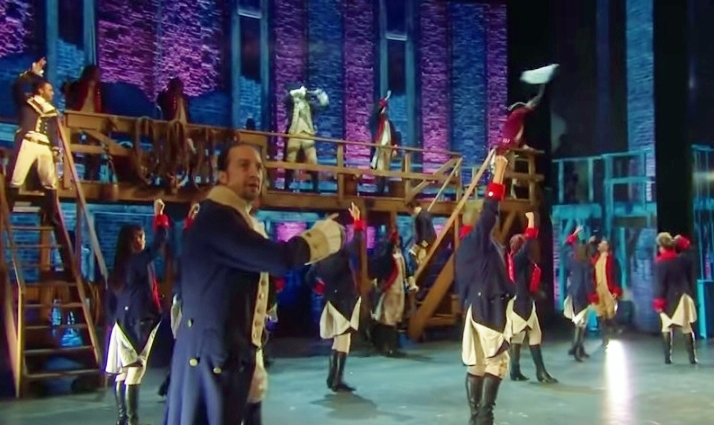
The original cast members of Hamilton perform “Yorktown” at the 2016 Tony Awards, with an introduction by President and Mrs. Obama.
(Watch it in the YouTube video.)
…
Enjoy it all. The music, the songs, the movies, the fireworks, your family and friends, our country’s history and promise. And have a fantastic Yankee Doodle Day.
You also might find these items of interest: