
Photo by Tara Winsteadf
…
Even before Department of Government Efficiency (DOGE) staff started messing around in government agencies, one targeted for overhaul already was making changes to improve its operations.
In fact, the Internal Revenue Service was proactively using artificial intelligence (AI) before the first Trump administration’s executive order in December 2020 “Promoting the Use of Trustworthy AI in the Federal Government.”
“Artificial intelligence (AI) is a transformative technology that holds substantial promise for improving the IRS’s examination efforts,” notes the report on its introductory page. And with added funding from the Biden Administration’s Inflation Reduction Act of 2022, TIGTA says the agency was working “to deliver cutting-edge technology, data, and analytics to operate more effectively.”
But, as the old saying (and my mom) point out, there’s always room for improvement.
That maxim is the basis for a May 19 Treasury Inspector General for Tax Administration (TIGTA) report that found the IRS could leverage its return examination results when using AI to select cases for further scrutiny and improve its processes.
The TIGTA report, “The IRS Could Leverage Examination Results in Artificial Intelligence Examination Case Selection Models and Improve Processes to Evaluate Performance,” also earns this weekend’s Sunday Shout Out.
Inefficient return examination selection process: TIGTA said current IRS tax return selection models have resulted in a high percentage of examinations that were completed with no change to the tax liability. That happens.
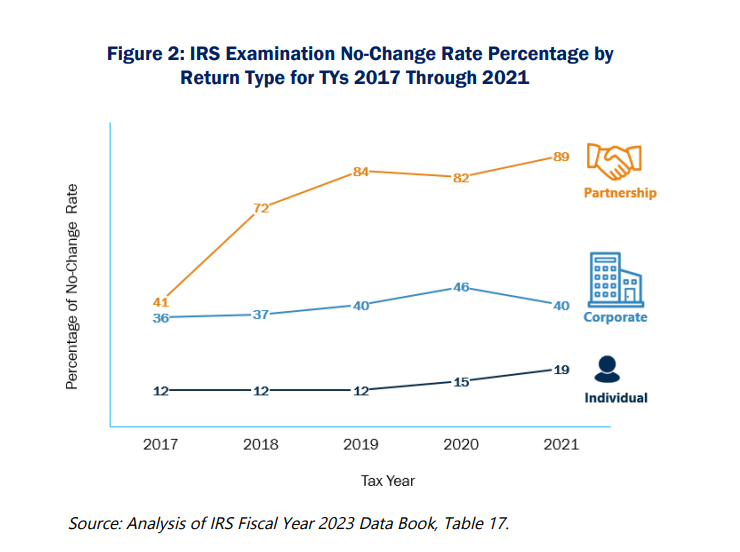
Such results mean that agency resources are wasted on unproductive examinations, noted the independent IRS watchdog. From the taxpayer point of view, compliant filers also are unnecessarily burdened.
AI, however, shows “substantial promise” for improving IRS examination efforts, says TIGTA. For example, the report suggests IRS use examination results to improve return classification and return selection AI models that could potentially identify new areas of noncompliance.
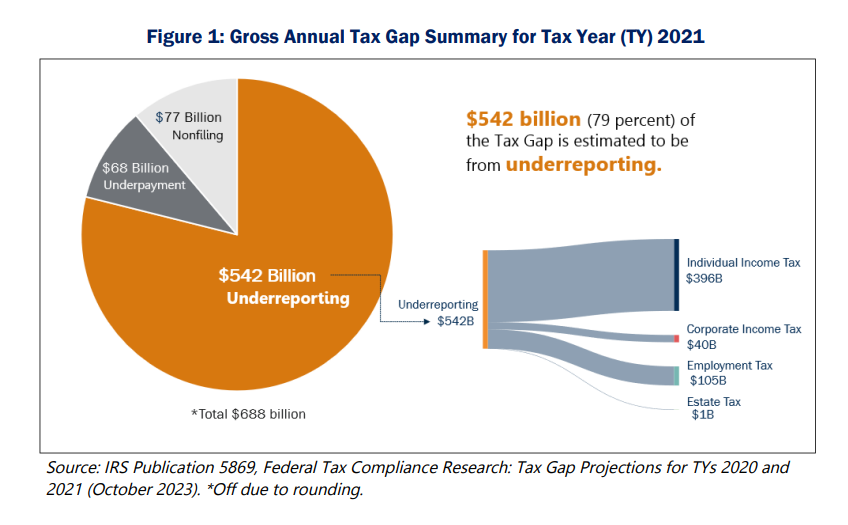
Trimming the Tax Gap: This could, in turn, lead to a reduction in the Tax Gap, the amount of money Treasury is legally owed, but that the IRS has been unable to collect.
The Tax Gap was most recently estimated for tax tear 2021 to be $688 billion annually. Seventy-nine percent, or $542 billion, of those uncollected funds are from underreporting.
AI models could provide the IRS with more effective metrics to measure and select the cases the agency examines.
Reducing the Tax Gap is crucial not just from a fiscal standpoint, but for the integrity of the tax system.
Noncompliant taxpayers can undermine public confidence in the fairness and integrity of the federal tax system, encouraging more noncompliance. A better way to collect will help in this area.
TIGTA recommendations: The report recommended three ways the IRS could better use AI to produce more efficient and effective return examinations.
The agency’s Chief Tax Compliance Officer, in partnership with the Chief Data and Analytics Officer where appropriate, should require division commissioners to —
- use governance processes to ensure that examination performance results are part of the monitoring and continuing refinement of the return classification and selection AI models;
- refine AI models by incorporating ensemble machine-learning when appropriate; and
- establish a measurement plan with appropriate metrics to monitor AI models to ensure that they are achieving the expected benefits and to correct any model drifts.
The IRS agreed with all three of TIGTA’s recommendations, and noted that regarding the second recommendation, it already has tested and implemented ensemble methods in AI models, where appropriate.
The IRS also agreed with the other two recommendations, but with a couples of caveats. First, it is awaiting new Treasury Department guidance on AI governance. Second, as with most things in the private and public sectors, the ability to follow the suggestions will depend on staffing constraints.
The staffing concerns also could be a big driver of increased IRS automation and AI use.
The IRS is expected to rely further on AI as it continues cuts to its workforce. Another TIGTA report released earlier this month noted that more than 11,000 IRS employees were either approved for the deferred retirement program or received termination notices during their probationary employment period.
These departures represent 11 percent of the IRS workforce. Most of the personnel losses were revenue agents, who often handle audits and examinations. Approximately 31 percent of these employees are no longer with the IRS.
You also might find these items of interest:
- AI can help the IRS do its job. Are we ready for that?
- TIGTA investigating DOGE and White House incursion into IRS
- IRS Commissioner touts the tax agency’s generational digital transformation
Advertisements
🌟 Search Amazon Tax Products 🌟
The text link above is an affiliate ad. If you click through and then buy a product, I receive a commission.