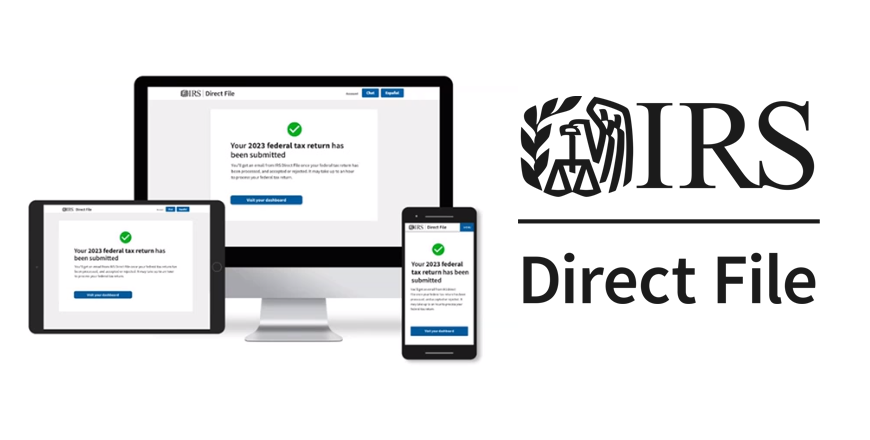
The Internal Revenue Service in 2024 offered some U.S. taxpayers a new, online, free way to complete their tax returns and e-file them.
The option, known as Direct File, is IRS-created and operated tax preparation software. Eligible taxpayers can use Direct File and avoid having to pay for commercial tax software.
For the first Direct File tax season, 12 states participated in the pilot. The Treasury Department and IRS evaluated results in those locations and in May announced that Direct File would be a permanent tax filing option.
Federal tax officials also invited all the other states to join Direct File.
This page keeps track of states that will be a part of Direct File’s second filing season in 2025. They are listed below with the latest to join at the top of the list. The state name links to one of my earlier posts and the date goes to the Treasury (or other official government agency) announcement.
UPDATE, Jan. 10, 2025: In announcing the start of the 2025 tax filing season today, the Internal Revenue Service also noted that another state, Illinois, has joined Direct File. This 13th Direct File member brings to 25 the number of participating jurisdictions, more than double those during the 2024 pilot program
UPDATE, Thursday, Oct. 3, 2024: Treasury and the IRS today announced that for the 2025 filing season, 25 states — the 12 in the pilot this year, and 12 that have joined to date since officials invited all states to join — will participate. Below are the 12, so far, newcomers.
|
State |
Date |
Number |
| Illinois |
2 million | |
|
100,000 | ||
| Idaho |
210,000 | |
|
410,000 | ||
|
700,000 | ||
|
120,000 | ||
|
600,000 | ||
|
1.25 million | ||
|
290,000 | ||
|
200,000 | ||
|
1.5 million | ||
|
1 million | ||
|
580,000 |
These states’ eligible taxpayers will join those filers in the original 12 Direct File states of Arizona, California, Florida, Massachusetts, Nevada, New Hampshire, New York, South Dakota, Tennessee, Texas, Washington, and Wyoming.
Eligible vs. actually used Direct File: When the 2024 Direct File pilot ended on April 15 this year, around 140,000 taxpayers in the dozen participating states had used the new program to prepare and electronically file their returns.
The number of filers was a tiny fraction — just 0.09960386 percent — of the more than 141 million 1040s filed by mid-April. But Treasury and IRS leaders noted that it was more than the IRS projected when it kicked off the agency-run free tax prep and e-filing program.
Officials also pointed out the filers, who generally reported they were happy with Direct File, claimed more than $90 million in refunds and saved an estimated $5.6 million in tax preparation fees.
The Treasury and IRS hope the growing number of eligible filers, as shown in the third column of the participating states’ table above, will add to substantial use of Direct File next year.
Who can Direct File: The eligible Direct File counts are because the program is not yet open to every U.S. taxpayer.
Obviously, you can only file if your state’s tax department has formally agreed to work with the IRS and Direct File. Then there are some additional limits on who can use the IRS program.
First, only taxpayers who get earnings that also are reported to the IRS can used Direct File. This means your income must come only from —
- Wage or salary income that’s reported on Form W-2;
- Social Security and Railroad Retirement income, reported on SSA-1099 or RRB-1099, respectively;
- Unemployment compensation, reported on 1099-G; and/or
- Interest income of $1,500 or less, reported on 1099-INT.
This prohibits those who have gig or business income.
Why the distinction? Because at this stage of Direct File, the IRS wants to be able to corroborate earning data entered on tax returns with the common corresponding third-party reports listed above.
Eligible filers also can claim some tax credits. During the pilot, the qualifying credits were the Earned Income Tax Credit (EITC), the Child Tax Credit, and the Credit for Other Dependents. For 2025, taxpayers who also claim the Child and Dependent Care Credit, Premium Tax Credit that helps cover Affordable Care Act insurance costs, Credit for the Elderly and Disabled, and Retirement Savings Contribution Credit.
Direct File users also must use the standard deduction.
And these standard deduction filers also are allowed to use Direct File and take the above-the-line deductions for student loan interest and/or educator expenses. In 2025, Direct File also will support taxpayers claiming deductions for Health Savings Accounts (HSA).
The IRS and Treasury plan to gradually add new Direct File options as participation expands.
The IRS.gov Direct File page has more the program. Just scroll down a bit for answers to frequently asked questions. You also can check with your state’s tax department as to whether or when it might join Direct File.

Advertisements
🌟 Search Amazon Electronics 🌟
The text link above is an affiliate ad. If you click through and then buy a product, I receive a commission.